
Products, people, and source discipline
About Max Pergola: What We Publish and Why
Max Pergola supplies factory-direct aluminum louvered pergola kits for residential and outdoor-living projects worldwide. This page explains who maintains the site, which records control an order, and where a useful planning example ends and a project decision begins.
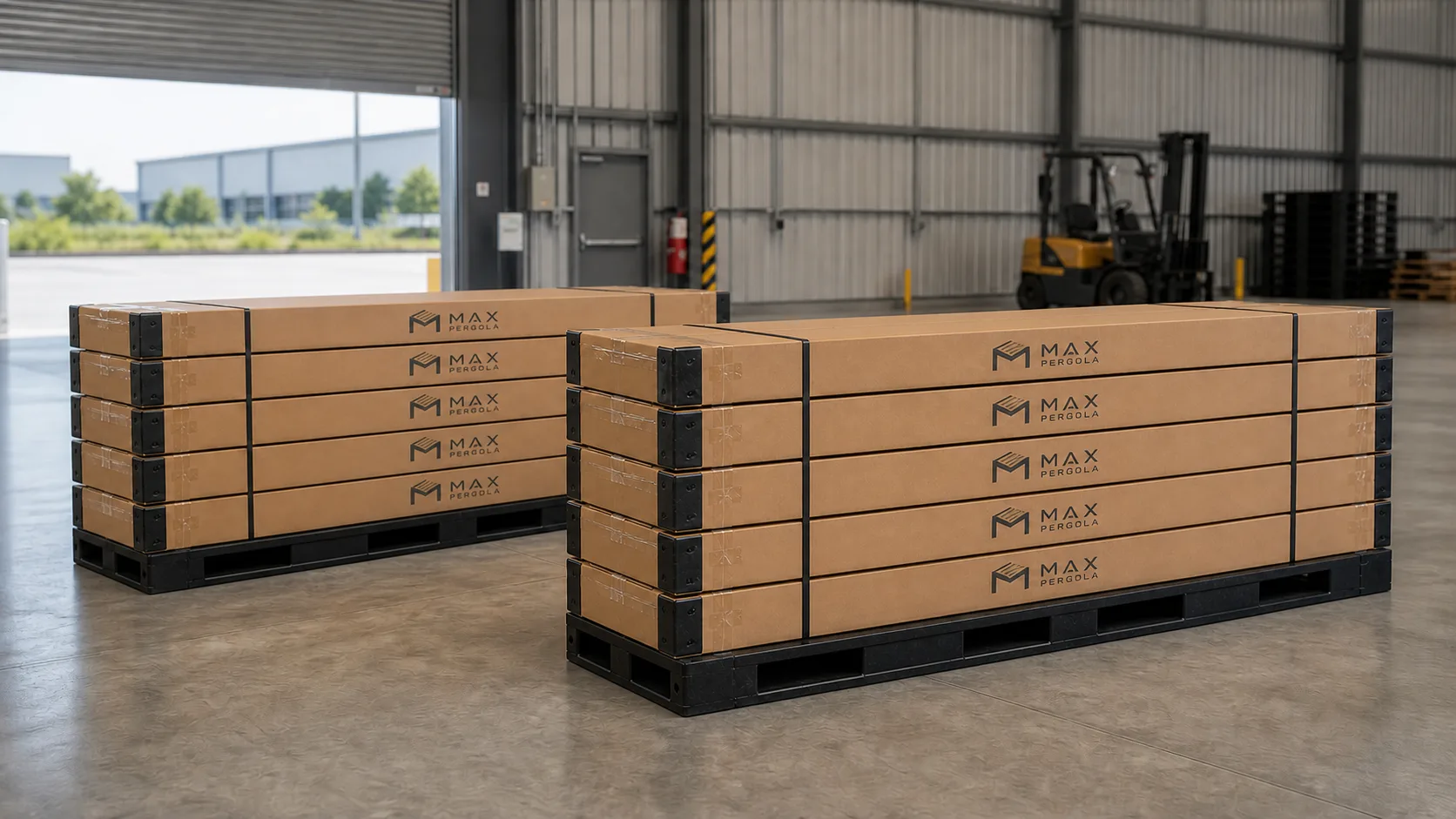 Illustration · not an actual shipment
What we do
Max Pergola Connects a Configurable Kit to a Documented Project
A pergola order is more than a roof style and nominal footprint. Layout, finish, controls, accessories, site conditions, delivery, unloading, and responsibility boundaries all need to agree.
Products with visible scope
The current range includes Standard manual louvers, Pro motorized louvers with perimeter-light preparation, Max motorized louvers with expanded louver-light preparation, and Custom configurations. The pergola kit comparison shows the choices a buyer can make before requesting a written quote. Product pages identify starting configurations and exclusions instead of presenting an incomplete number as an installed price.
Published profile dimensions and the 6063-T6 order design basis are available in the specifications and bill-of-materials guide. Those values help with comparison and order review. They do not, by themselves, establish capacity for a particular address, foundation, connection, wind exposure, or snow condition.
Project support with named contact
Sales Director Doris Li handles public product inquiries at inquiry@maxpergola.com and +86 138 8333 8993. A useful inquiry includes the delivery country and postal code, target width and depth, freestanding or attached layout, preferred roof operation, finish, accessories, site photographs, and known permit or design requirements.
Orders can be quoted factory-direct from Chongqing under Delivered Duty Paid terms to supported destinations worldwide. The order confirmation—not a general site statement—identifies the route, ship-from location, included duties and taxes, availability, commercial terms, access requirements, and unloading responsibility.
Our source hierarchy
Which Information Controls a Real Order?
The closer a record is to the approved project, the more authority it has. This order prevents a planning article or image caption from being mistaken for a contractual specification.
- 01 · Approved documentsOrder confirmation and drawingsSigned confirmation, approved shop drawings, and supplied installation documents govern the project.→
- 02 · Commercial scopeConfiguration-linked quoteThe written quote records price, delivery, inclusions, exclusions, and configuration.→
- 03 · Planning contextCurrent pages and examplesGuides help buyers ask better questions; imagery and examples are not bills of material.→
How the site is maintained
Useful Answers Before Search Phrases
We write for a purchase decision
Planning pages are organized around the questions that alter cost, fit, safety, or ownership: how the roof behaves, what supports the posts, where water goes, who completes electrical work, how the shipment is received, and which records the local authority may require. Search language helps us understand the question, but it does not justify repeating a phrase where a clearer sentence will do.
Pages identify assumptions and exclusions close to the relevant claim. The wind, snow, and span calculator, for example, labels its output as preliminary screening and points users to an authoritative local hazard source. It does not turn a postal code into structural approval.
We revise facts when the scope changes
Product, shipping, price, warranty, and technical statements are reviewed against current internal product records before publication. Visible review notes identify the party maintaining each important page. Machine-readable descriptions in the sitemap, feed, structured data, and AI-oriented context files are checked against the same public facts.
We do not publish invented customer ratings, certifications, inventory guarantees, capacity claims, lead times, or local-code approvals. When a value is not confirmed for the actual project, the page directs the reader to the quote, drawing review, local authority, or qualified trade responsible for that decision.
What we will not blur
Product Support Is Not a Substitute for Local Responsibility
Decisions that stay with the jobsite
Setbacks, permit triggers, utilities, soil, existing concrete, deck framing, wall construction, wind exposure, snow conditions, foundation design, anchoring, electrical installation, inspection, and final acceptance vary by location. Max Pergola can organize the product inputs and supplied documents, but the responsible local professionals and authority decide what the site requires.
This distinction is especially important for attached roofs, elevated decks, open coastal exposure, heavy snow areas, and projects that add screens or glass. Those conditions can change loads, connections, drainage, and access. They should be visible in the project brief rather than discovered after delivery.
How readers can flag a problem
If a page appears inconsistent with a current quote, drawing, manual, or product record, email the URL and the conflicting detail to inquiry@maxpergola.com. We review the controlling source, correct public text when needed, and keep contractual decisions in the order record. Questions about availability, price, lead time, included accessories, or shipping should always be resolved in writing for the specific configuration.
That feedback loop matters because planning content ages. A clear correction is more useful than leaving an attractive but outdated sentence online.
The practical next step
Bring the Site Facts; We Will Build the Product Brief.
Start with measurements, layout, roof preference, accessories, destination, and photographs. We will identify what can be quoted and which project questions still need an owner, installer, engineer, electrician, or local authority.