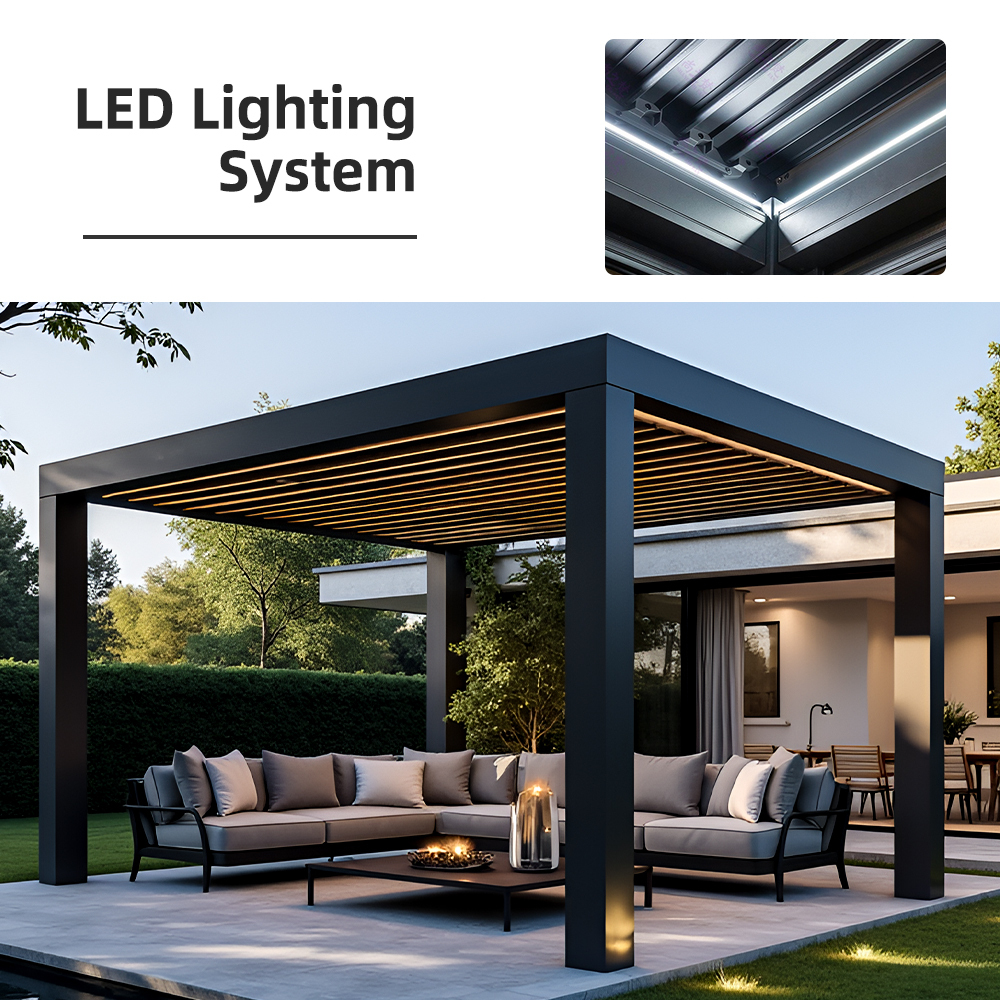
1. Perimeter light for conversation
A concealed linear source around the beams can wash the seating area with soft light while keeping the center of the roof visually quiet.
Ambient layerDimmableLow glare

Pergola lighting ideas
Picture the patio at the hour you will actually use it. Dining needs comfortable light on faces and plates; cooking needs focused task light; steps need quiet guidance. Fixture positions, controls, drivers, and wire routes should follow those scenes before production.
Your next best steps
Lighting, motors, screens, heaters, and outlets can compete for routes and controls. Coordinate them before production.
Use low-glare illumination to make faces, tabletops, and the overall room feel comfortable.
Add focused brightness over grills, counters, serving areas, or work surfaces where visibility matters.
Highlight posts, planting, steps, or the roofline without making every surface equally bright.
Four useful layers
A strong plan creates separate scenes for dinner, cleanup, conversation, and safe circulation instead of relying on one bright fixture.
A concealed linear source around the beams can wash the seating area with soft light while keeping the center of the roof visually quiet.
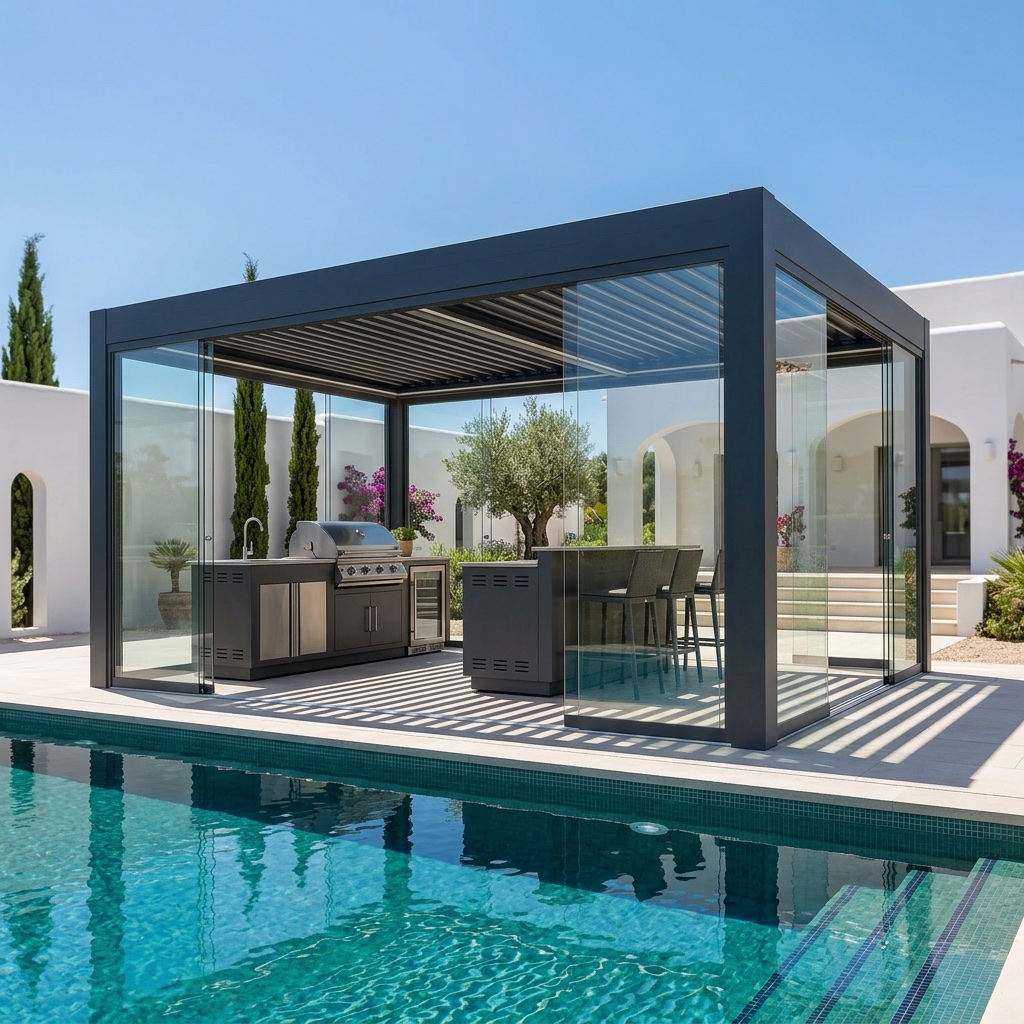
Put brighter, shielded light over food preparation and serving surfaces. Keep reflections and direct views of the source out of adjacent seating.
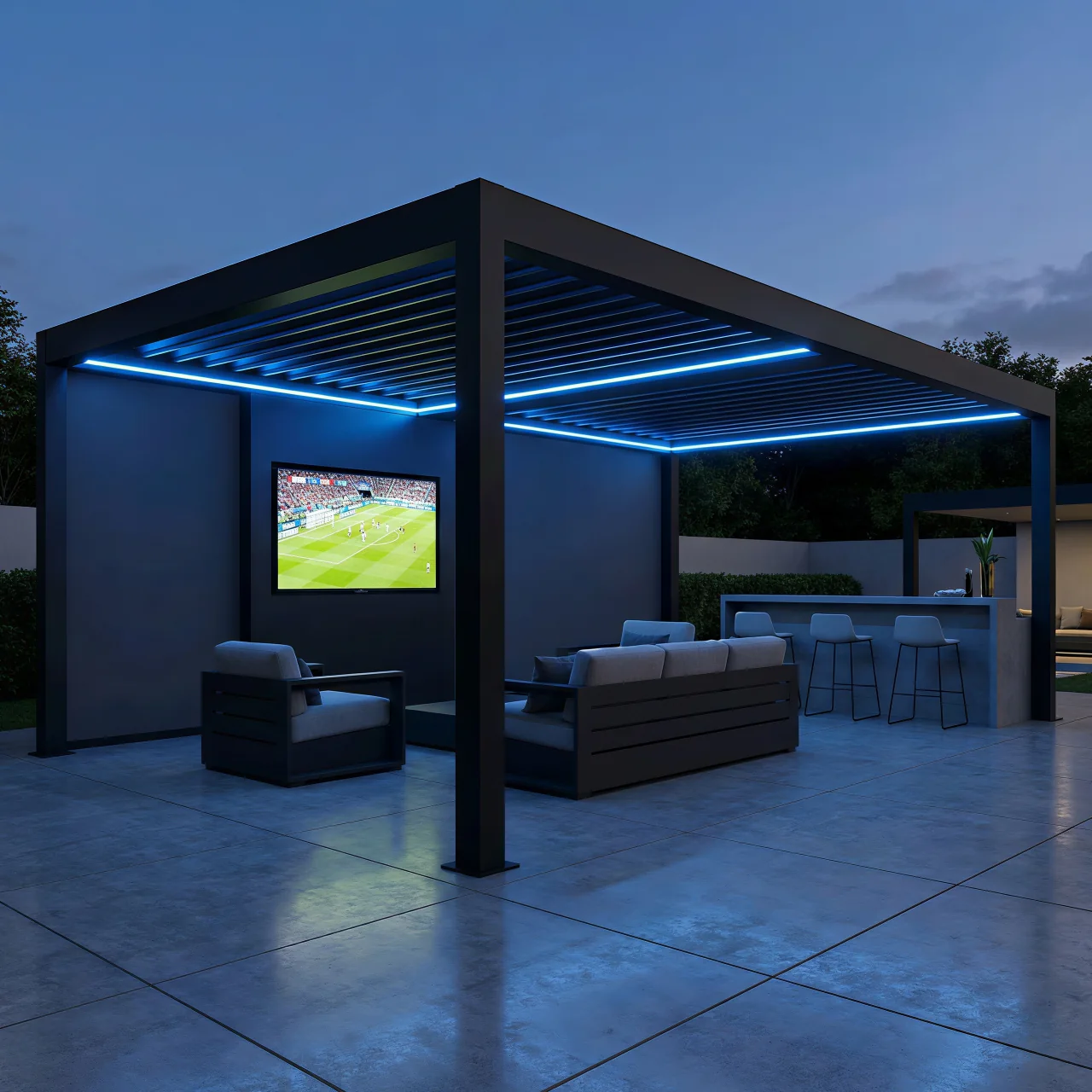
Factory-prepared louver-mounted lighting can emphasize the adjustable roof pattern. Confirm wire movement, service access, and compatible components before ordering.
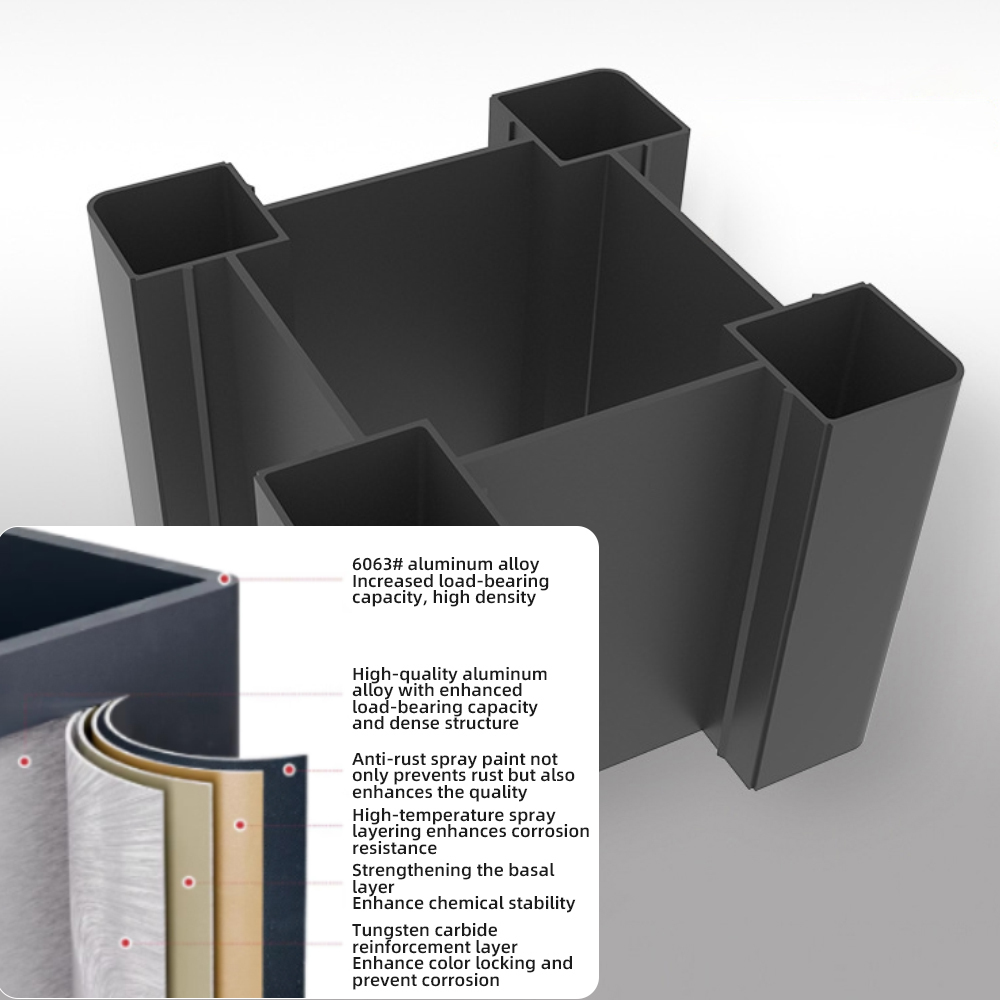
Use restrained light near steps, changes in level, and circulation edges. Coordinate post routing before production so field drilling is minimized.
Plan by activity
| Scene | Primary light | Add only if needed |
|---|---|---|
| Outdoor dinner | Soft ambient light around or above the table | Low path light toward the house |
| Cooking and serving | Focused task light over counters and grill controls | Ambient light for guests nearby |
| Conversation lounge | Dimmed perimeter or reflected light | Accent light on planting or the roofline |
| Television or projection | Low indirect light behind or beside seating | Separate path-light circuit |
| Cleanup and maintenance | Brighter service scene with full-area visibility | Independent switch or control preset |
Light quality and control
Comfort depends on brightness, distribution, color, glare, switching, and what the fixtures look like when the roof is open or closed.
Warm-white light can make wood, food, skin tones, and conversation areas feel relaxed. A slightly more neutral appearance can improve task visibility over a grill or serving counter. Instead of selecting one color temperature from a photo, view a real sample against the pergola finish, paving, furniture, and house lighting after dark.
Keep adjacent sources reasonably consistent unless a deliberate contrast separates task and ambient zones. Strong mixtures of warm and cool white can make a small outdoor room feel visually fragmented. Color-rendering quality also matters where food, finishes, and faces should look natural.
Locate linear sources above normal sightlines, shield downlights from seated views, and avoid bright reflections in televisions, glass panels, pools, and polished counters. More lumens do not guarantee better visibility if the source is uncomfortable to look at. Dimming and reflected light often improve adaptation.
Separate ambient, cooking, path, and accent lighting when the activities differ. A dinner scene may use soft perimeter light and a low table layer; cleanup can temporarily raise task brightness; television viewing may keep only indirect and path lighting on. Label switches or save clear control presets so guests can use the system.
Fixture, driver, connector, conductor, enclosure, dimmer, and control ratings must match their actual wet or damp exposure, temperature, mounting, and local requirements. Coordinate grounding or bonding, GFCI protection, disconnects, surge protection, and inspection with a qualified electrician where required.
Drivers and connections need accessible, protected locations that do not block gutters, post drains, louver movement, screens, heaters, or future replacement. Record model numbers and circuit locations in the handoff package rather than hiding every serviceable component permanently inside the frame.
Factory-prepared lighting
Lighting added late can require visible conduit, field drilling, or inaccessible connections. A preproduction plan lets the product team review beam channels, post routes, mounting points, controls, and accessory conflicts.
Lighting preparation does not replace electrical design or installation. The written quote and approved documents define included components and factory work.
Common planning mistakes
Dining, cooking, and late-night conversation need different brightness. Separate useful layers so every fixture is not on at full output.
Shield direct views of light sources from seated positions and neighboring properties. Reflected light is often more comfortable than visible diodes.
Late routing can conflict with louvers, drains, screens, or heaters. Coordinate all moving and electrical accessories before production.
Pergola lighting FAQ
Use layers: soft ambient light for the room, task light where people cook or serve, and restrained accent or path lighting where it adds depth or safer circulation. Put dissimilar tasks on separate dimmable controls when practical. Check the result from each seated position, the house, neighboring property, and the main approach after dark.
Some Max configurations can be prepared for louver-mounted LEDs. Confirm the plan before production so blade movement, protected wire routes, mounting, drivers, controls, electrical ratings, and future service access can be reviewed together.
There is no single required value. Warm white is commonly comfortable for dining and conversation, while a more neutral task layer may help at counters. Compare real samples with the finishes, furniture, house lights, and desired mood.
Yes. Fixture locations, circuits, controls, drivers, wire routes, and accessory conflicts should be resolved before production. Final field connections follow the approved documents and local requirements.
Use a qualified electrician where required. Outdoor component ratings, grounding or bonding, GFCI protection, disconnects, surge protection, permits, and inspections depend on the equipment, jobsite, and jurisdiction.
Take the lighting plan to the quote
Compare manual and motorized packages, select perimeter or louver lighting preparation, and flag screens, outlets, or heaters before production.