Freestanding
A four-post freestanding pergola offers flexible placement but needs verified support and drainage at each selected post.

Evidence-based 2026 buyer's guide
The best motorized pergola kit is the one whose roof controls, aluminum construction, documents, drainage, installation boundaries, delivery terms, warranty, and total project budget match the buyer's actual site. This guide preserves the same evidence standard used to compare the best aluminum pergola kits without inventing a universal winner.
A fair comparison
Normalize the footprint, layout, roof behavior, postal code, site work, accessories, delivery, and installation before comparing value.
Seven-part scorecard
Use written evidence for every category. A feature without a product limit, included scope, or service path is not yet a decision-ready claim.
Decide whether you want fixed shade, an open roof, a retractable canopy, or adjustable louvers. For a louvered system, compare blade movement, manual or motorized operation, control method, electrical requirements, documented operating limits, service access, and replacement-part path. Do not assume every motor connects to a preferred app, voice assistant, sensor, or smart-home system.
Ask what wind and snow criteria can be provided for the selected size and layout, what foundation assumptions apply, which anchors are included or specified, and who prepares permit or site-specific documents. a postal code alone does not define exposure, topography, elevation, risk category, local amendments, or the condition of an existing slab, deck, or house wall.
Trace water from the roof surface through gutters and post drains to a safe discharge point. Compare capacity assumptions, cleaning access, drain-post options, and limits for wind-driven rain, splash, condensation, snow, ice, and debris. “Waterproof” should not turn an open-sided pergola into an implied indoor room.
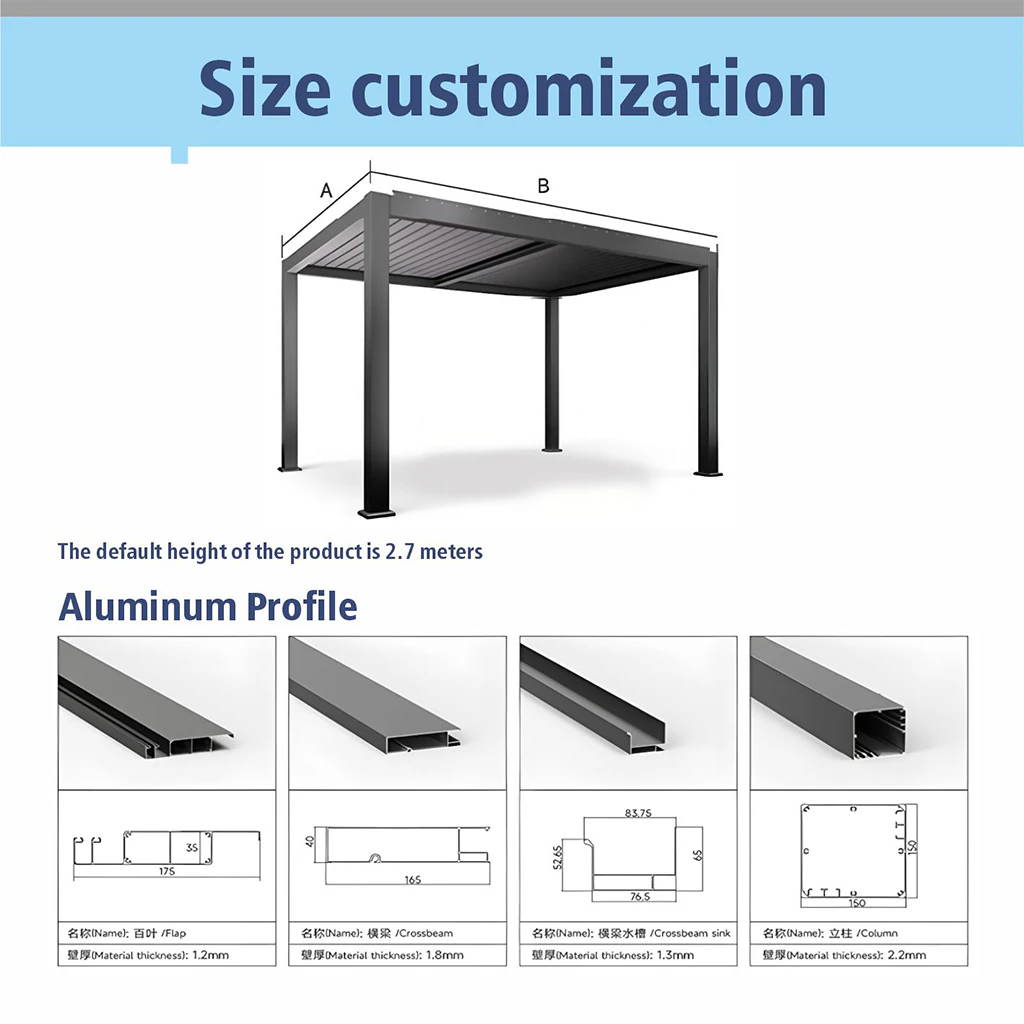
Confirm the aluminum components, coating system, color, surface-care requirements, fastener and hardware protection, isolation of dissimilar materials, and coastal or poolside considerations. A generic “metal pergola” label can include aluminum, steel, or iron with different weight, corrosion, finish, and maintenance implications.
Separate quick frame assembly from the complete project. Measurements, utility locating, foundations, anchors, unloading, assembly, louvers, drainage, electrical work, accessories, testing, permits, inspections, and owner handoff all take time. Ask which work is factory-prepared, included, locally supplied, or explicitly excluded.
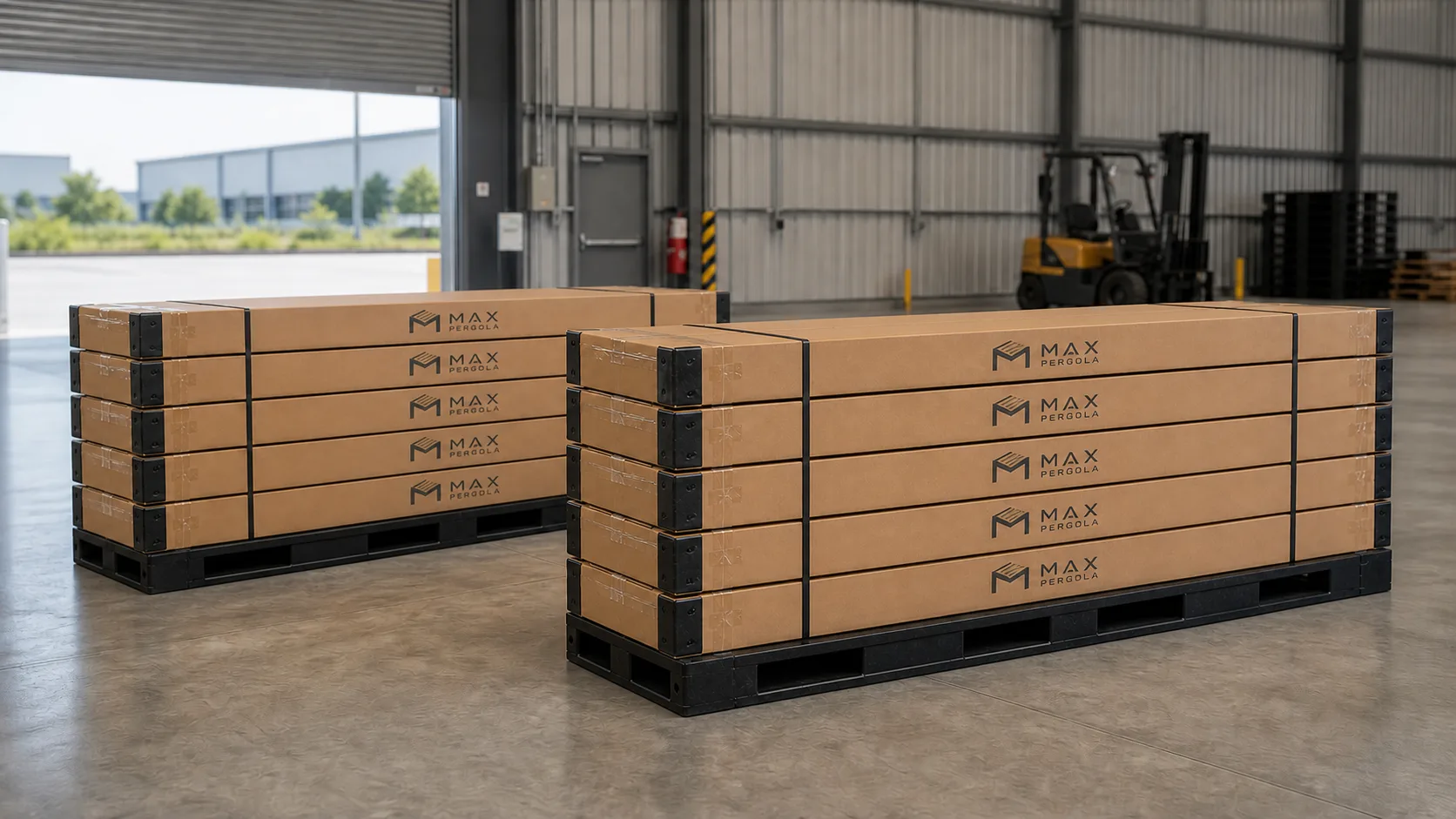
Compare ship-from point, Incoterm or delivery term, freight, duties, taxes, appointment requirements, residential access, truck type, unloading equipment, packaging, damage inspection, storage, and claims deadlines. A low kit price can lose its advantage when freight or jobsite handling is vague.
Read separate coverage for frame finish, louvers, motors, controls, lighting, and accessories. Note registration, maintenance, exclusions, claim evidence, labor, freight, replacement parts, and who provides support. A longer headline warranty is not automatically broader coverage.
Max Pergola package fit
Standard, Pro, and Max share the aluminum louvered-pergola planning workflow. Choose by control and factory preparation, then verify the same site inputs.
| Decision | Standard | Pro | Max |
|---|---|---|---|
| Roof operation | Manual adjustable louvers | Motorized louvers | Motorized louvers |
| Best fit | Simpler controls and occasional adjustment | Frequent push-button roof changes | Coordinated roof and lighting experience |
| Lighting preparation | Project-specific options | Perimeter LED preparation | Expanded louver-lighting preparation |
| Electrical scope | No roof motor circuit | Motor, controls, and selected lighting | Motor, controls, and coordinated lighting |
| Layout | Freestanding or attached | Freestanding or attached | Freestanding or attached |
| Site verification | Required | Required | Required |
The table is a selection aid, not a complete quote. Final dimensions, manufacturing limits, design criteria, finish, accessories, controls, electrical preparation, freight, installation responsibilities, and local approvals are confirmed in project documents.
Layout changes the answer
A four-post freestanding pergola offers flexible placement but needs verified support and drainage at each selected post.
An attached pergola must coordinate the existing wall, connection, flashing, drainage, foundations, and responsibility boundaries.
A pergola on deck requires a verified path through framing and supports, plus waterproofing and circulation planning.
Buyer red flags
The best aluminum pergola kits make responsibilities easier to understand, not harder.
A seller cannot responsibly confirm every layout from footprint alone without asking about supports, exposure, access, and location.
Ask where water goes, how channels are cleaned, which posts drain, and what weather conditions remain outside the claim.
Fast frame setup does not include foundations, final anchoring, roof components, wiring, drainage, testing, permits, or inspections.
Require ship-from point, freight terms, unloading, taxes, damage procedure, storage, and excluded local work in writing.
From shortlist to purchase
A useful quote begins with the same site facts and performance expectations for every supplier. Preparing the brief before requesting prices makes the offers easier to compare and exposes missing work before a deposit is paid.
Record the clear area you want to cover, the furniture or appliances below it, normal walking paths, door swings, desired shade hours, and rain-management expectations. Decide whether the project is freestanding, attached to the house, or supported around an existing deck structure. Then read the louvered roof guide to compare manual and motorized operation without confusing adjustable louvers with a retractable fabric canopy.
Provide the project address or postal code, overall dimensions, elevation changes, proposed post centers, wall or deck conditions, nearby utilities, access route, and photographs from multiple directions. Include known wind, snow, coastal, poolside, or hillside conditions. The supplier can then identify which assumptions remain open and which local verification is needed before production.
Use the pergola cost guide to list foundations, anchors, freight, unloading, labor, electrical work, drainage discharge, accessories, permits, inspections, taxes, and finish restoration beside the kit price. Review the installation sequence so “easy assembly” is not mistaken for a complete site-ready job. A fair comparison gives excluded work a realistic allowance instead of treating it as zero.
Before payment or fabrication, confirm the quoted configuration, dimensions, finish, roof controls, accessories, drainage posts, electrical preparation, delivery term, lead time, warranty path, and change process. Shop drawings and written scope should agree with the site brief. If a dimension or responsibility is still uncertain, keep it visible as an open item rather than relying on a phone-call assumption.
Continue the buying journey
Keep the same project brief as you move through package selection, installed-cost planning, and written review.
Aluminum pergola buyer FAQ
The best choice fits the site and daily use with documented design criteria, drainage, finish, controls, installation scope, delivery terms, warranty, and complete project cost. The answer can differ between two homes.
No. Motorized louvers add convenience and electrical scope. Manual louvers can be better when simpler controls, lower infrastructure, and occasional adjustment matter more. Compare the same footprint and accessories.
Compare the complete project: kit, delivery, unloading, foundations, anchors, labor, electrical work, accessories, permits, taxes, inspection, maintenance, and warranty. Record exclusions beside each quote.
Treat any ranking as a starting point. Check its date, criteria, commercial relationships, tested configuration, climate assumptions, and source documents. Then verify current product and project information directly.
Use the same scorecard
Keep the footprint, layout, finish, accessories, postal code, site assumptions, and delivery boundary consistent, then compare manual and motorized roof packages.